

Designing for Part L: Why Screed Specification Is Now Critical for Future Homes Compliance
The UK’s Future Homes Standard marks a decisive shift in how homes are designed, built and heated. With Part L (Energy and Greenhouse Gas Emissions) driving a 75–80% reduction in carbon emissions compared to 2013 standards, architects are now working within a fundamentally different design framework: one where every component of the building fabric must actively contribute to performance.
Whilst much of the energy efficiency transition has focused on heat pumps and insulation, floor construction, and specifically screed specification, has become a critical factor in achieving compliance.
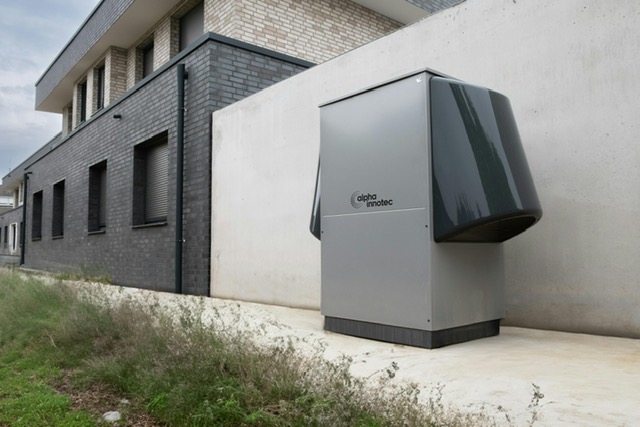
The Proliferation of Heat Pumps and What It Means for Floors
Part L is accelerating the transition away from gas boilers towards low-carbon, low-temperature heating systems, primarily heat pumps. These systems operate most efficiently at low temperatures of 30–50°C, which fundamentally changes how heat is delivered within a building. Traditional radiators can struggle at these temperatures. Underfloor heating systems (UFH) deliver even heat distribution at lower temperatures and can be ~25% more efficient than radiators in some cases. This is why heat pump specification typically goes with UFH. As a result, underfloor heating is rapidly switching from a luxury upgrade to a default design solution.
UFH works well with high insulation strategies, but designing for reduced floor build-ups and insulation integration requires coordination with contractors and floor system specialists. For architects, this means specifying UFH early (at stages 2-3 of RIBA’s Plan of Works) and aligning with MEP engineers to ensure insulation compatibility, airtightness and fire compartmentalisation. Last, but not least, the specified screeds must be compatible with the floor build -up and insulation thickness, demonstrating the desired load distribution capabilities and point load resistance required for the project. In combination with UFH, screeds can optimise system performance and provide extra airtightness. Floors are no longer passive design elements, but active components of the building’s energy system.
Underfloor Heating Performance Starts with the Screed
UFH performance is heavily dependent on how effectively heat is transferred from the pipework into the occupied space. This is where screed selection is essential to optimal performance. Anhydrite screeds outperform traditional options by providing faster, more efficient heat transfer thanks to their naturally higher thermal conductivity. Self-levelling liquid screeds, such as those in the Gyvlon range optimise UFH performance by encapsulating the pipes fully and eliminating air voids. Their lower thermal resistance maximises UFH systems’ output at lower temperatures, making them ideal for wet or dry systems proving heating and cooling. In fact, our ThermioMAX® FD E2C (fast drying, early to cover) formula is BBA-approved thermally specifically for this applicationCompared to traditional sand–cement screeds, which are typically thicker and slower to respond, flowing anhydrite screeds are inherently aligned with low-temperature heating strategies whether standard or high thermal content versions are used. The benefits also transfer to the building occupants long-term, as faster heat up times at lower temperatures mean greater comfort at lower energy costs.

Fabric-First Design Is Changing Floor Build-Ups
To meet Part L energy targets, architects are adopting a fabric-first approach, prioritising, higher insulation levels, improved airtightness, and reduced heat loss through the building envelope. This means specifying thicker insulation layers as standard, requiring screeds that can perform reliably over compressible insulation. In addition, floor build-ups must be optimised for both structure and thermal efficiency. Gyvlon’s XTR screeds are engineered specifically for this reality, complementing steel decking and converting the system to a structural component.
As insulation thickness increases, so does the need for screeds that can handle load distribution and deflection. Gyvlon’s solutions address this with excellent load-spreading capability and high compressive strength, especially the reinforced Gyvlon XTR, designed to resist cracking over flexible substrates.
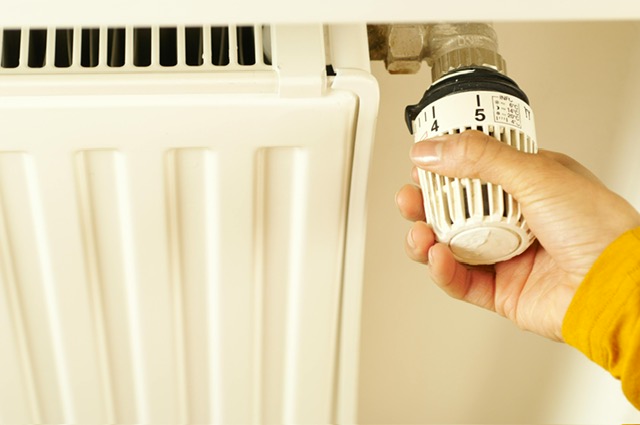
Gyvlon ECO® Screed - Designed for Modern Floor Construction
Gyvlon ECO® Screed is purpose-built for floating (over insulation and membrane) and unbonded (over a membrane) applications, making it fully compatible with airtight membranes, damp proof membranes (DPMs), thermal and acoustic insulation systems. Its free-flowing, self-compacting formula requires no mechanical fixings, layer bay sizes reducing joints, allowing for more design freedom on the floor coverings. Its installation is consistent, void-free and protective of airtight junctions.
Thin Section Performance for Faster Response
One of the most important advantages for architects is the ability to design reduced floor build-ups without compromising performance. Gyvlon screeds can be installed in significantly thinner sections than traditional screeds. Systems such as Gyvlon ThermioMAX® FD E2C can be installed from as little as 10mm above UFH pipes for low profile and 15mm for floating systems. This delivers faster heat response times, improved system efficiency, and greater design flexibility in constrained build-ups in retrofitting and refurbishment projects.
Supporting Airtightness and Junction Detailing
With tighter airtightness targets under the Future Homes Standard, junction detailing is now critical, especially at floor-to-wall interfaces. Gyvlon screeds support this by integrating seamlessly with edge strip systems, maintaining insulation continuity and applying without disturbing airtight membranes.
The result is a floor system that contributes to, rather than compromises, the building’s airtightness strategy.
A New Role for Architects: Designing Floors Earlier
One of the biggest shifts driven by Part L is when floor systems are considered. Specifying underfloor heating and screed during the Concept and Developed Design stages enables architects to optimise floor build-ups, coordinate insulation, structure and services and ultimately, ensure compliance with SAP and Home Energy Model targets.
Floor specifications are no longer guided by rules of thumb, but driven by energy modelling, considering the whole system. Screeds must be compatible with insulation, UFH system, floor finishes, and airtightness strategy, so they can no longer specified in isolation or as an afterthought.
The Shift Away from Traditional Screeds
While regulations do not explicitly mandate screed types, the direction of travel is clear.
Traditional sand–cement screeds require greater thickness, offer lower thermal performance and respond more slowly to heat input, anhydrite flowing screeds are more thermally efficient and better suited to thicker insulation and low-temperature heating systems, enabling a fabric-first approach to methods of construction. Against the changes to the Future Homes Standard, screed is a compliance-critical part of the flooring system.
Gyvlon screeds provide solutions that are fully aligned with UK’s amplified drive to home energy efficiency by supporting low-carbon design, enabling high-performance UFH, and integrating seamlessly into modern, fabric-first construction. In the context of Part L, the question is no longer “which screed?”, but whether your screed is actively helping you meet compliance.
If you need guidance on choosing the best screed for your application to help you meet Part L requirements, book our dedicated CPD on the subject.